

Bitcoin in New Zealand in 2025 - the year in review
Another year has whistled by, and what a year it’s been for Bitcoin in New Zealand. Following on from our annual reviews in 2023 and 2024, it’s time to take a look at what happened in 2025. Globally, the Bitcoin conversation has moved the "enemy of the state" phase into the halls Wall Street and governments. Here in New Zealand, we're following that trend, but what hasn't changed are the grassroots level energy and communities which are are the building blocks of it all.
In this review, we’ll take a look at the massive strides made by the local community—from circular economies popping up in the South Island to our very own Bitcoin Policy Institute making waves in Wellington. We’ll also cover the year for Kiwi Bitcoin businesses, the latest on sustainable mining in our backyard, and the conversations happening with our lawmakers.
Whether you’re a long-term hodler who has been with us since the early Bitkiwi meetups or you're just starting your Bitcoin journey, this article is for you. We'll break down everything that's happened in Bitcoin in New Zealand in 2025, in friendly, easy to understand language, and point you in the right direction to connect with Bitcoiners in your area. So let’s dive in and see how far we’ve come and where 2026 is likely to take us.
Contents & Quick Links
- Bitcoin Events in 2025 - Bitkiwi
- Bitcoin Meetups
- Bitcoin Community of the Year
- Adoption in 2025 - Institutions & Merchants
- Regulation & Politics
- Bitcoin Businesses & Mining
- Case Study - Escaping Merchant Fees with Bitcoin
- Why New Zealand needs Bitcoin
- Bitcoin Media in New Zealand
- Bitcoin goes to the Polls in 2026
Bitcoin Events in 2025 - Bitkiwi
In 2025, the Bitkiwi meetups solidified their position at the heart of the New Zealand Bitcoin community, evolving from social gatherings into a platform for major business launches and policy debate.
Here's a quick rundown of Bitkiwi in 2025:
Bitkiwi XII (Queenstown, March 1st)
Referred to as the "biggest and best" event to date, this flagship weekend attracted Bitcoiners from all over New Zealand and beyond.
- Cody Ellingham (Transformation of Value podcast): Opened the proceedings with reflections on the Bitcoin and its future in a connected global world.
- Andrew (Kiwi Bitcoin Guide): Presented a New Zealand-centric deep dive into Joe Bryan's "What's the Problem," video, including a special video message for Kiwi Bitcoiners from Joe himself.
- Ketan (Ministry of Nodes): Visited from Australia to deliver a masterclass on why and how to run your own node.
- James Swarbrick (Swarbricks Law): Provided crucial legal insights into inheritance planning for Bitcoiners.
- Rob Clarkson (Lightning Pay & Bitcoin Basin): Stole the show with all the exciting announcements from Queenstown and Lightning Pay.
Announcements:
- Lightning Pay announced significant outside investment to focus entirely on Bitcoin payments for Kiwis.
- The launch of Bitcoin Basin, an initiative dedicated to creating a Bitcoin circular economy in the Queenstown Lakes region.
- The announcement of a collaborative Bitcoin workspace in Queenstown (New Zealand's version of "PlebLab").
Bitkiwi XIII (Auckland, July 26th)
After nearly two years away from Auckland, Bitkiwi "rocked the Birdcage" tavern with a massive turnout of locals and traveling plebs.
- Nell Hunter (Bitcoin Basin): Spoke on the psychology of different types of Bitcoiners and the balance between HODLing and building a circular economy with first hand insights from Queenstown.
- James Viggiano (Unspent Capital): Explored the concept of "unspent capital" and the importance of donating to Bitcoin builders and open-source developers.
- James Swarbrick (Swarbricks Law): Lifted the lid on what it's like to manage a Bitcoin treasury in a working business, detailing his family law firm’s four-year journey holding Bitcoin on its balance sheet.
Announcements:
- The Bitcoin Basin reported a milestone of 32 local businesses now officially accepting Bitcoin via Lightning Pay.
- The Bitcoin Shop gave away a Bitaxe to a lucky attendee, highlighting the growing interest in "home mining" amongst Kiwis.
Bitkiwi XIV (Wellington, October 25th)
Held at Chouchou, a brand new and very high profile Bitcoin merchant on the Wellington waterfront, this event celebrated the third anniversary of the first Bitkiwi.
- Joel Robinson (Radical Investment): Provided a summary of Bitcoin’s growing role in the traditional investment world and shared how New Zealander's can now get exposure to Bitcoin in their KiwiSaver accounts.
- Jason Crowe (BPINZ): Shared his personal Bitcoin journey and advocated for individual education and the importance of physical community connections.
Major Announcements:
BPINZ Launch Event: The Bitcoin Policy Institute of New Zealand, announced their upcoming launch event and tax policy proposal, with several committee members in attendance.
Expansion plans for Radical Investment: Joel introduced his team and announced some new additions - Darcy Ungaro has now joined the Radical team to be their Auckland based advisor.
Bitkiwi in 2026
Looking ahead to 2026, the tradition of spreading the orange pill across the country continues. Bitkiwi has confirmed that the first event of the new year, Bitkiwi XV, will be held in Christchurch on March 7th, followed by a return to Auckland in July and Wellington in October.
If you've never attended a Bitcoin event, you will love Bitkiwi and it's the perfect place to start for all Kiwi Bitcoiners. They're relaxed and friendly and the perfect place to talk Bitcoin, which we all love doing!
Find out more about Bitkiwi here.
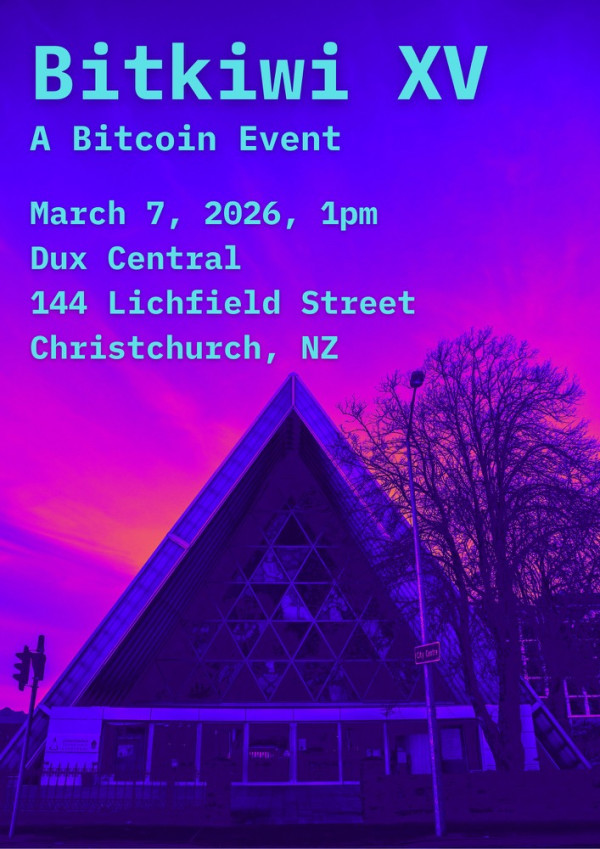
New Zealand Bitcoin Meetups
- Auckland Bitcoin Club: This group has become one of the most active in the country, meeting monthly. They recently settled into The Birdcage and AndrewAndrew as their regular haunts. Connect with them on X (@aklbitcoinclub) for the latest dates and venues.
- Wellington Bitcoiners: The capital's meetup scene was revitalized again in 2025. Meetings are held every month at Chouchou, Wellington's premiere Bitcoin merchant. Check out the details on meetup.com for upcoming dates.
- Christchurch Bitcoin Meetup: A consistent pillar of the South Island scene, these plebs meet on the first Wednesday of every month at Bar Yoku on Welles Street. You can find the details here on Meetup.com.
- Queenstown Bitcoiners: Driven by the Bitcoin Basin initiative, this group is at the forefront of circular economy adoption. They meet on the third Thursday of every month. Stay updated via BitcoinBasin.nz
If you are looking for a meetup near you or want to start one in your own town, the best places to connect are on X or on our events listings here.
Bitcoin Community of the Year - Queenstown and the Bitcoin Basin
Queenstown has separated itself from the pack with the efforts going into creating a Bitcoin circular economy and the continued growth and success of Lightning Pay, and is now New Zealand's Bitcoin hub. The Bitcoin Basin initiative has successfully integrated Bitcoin into the fabric of the local community, making it possible to deal with a lot of Bitcoin merchants for all kinds of goods and services.
What's happening in Queenstown?
- A Growing Circular Economy: The region now boasts a network of over 40 local merchants who officially accept Bitcoin. The diversity of businesses is staggering, ranging from restaurants, cafes, visitor activities, legal, medical and business services. You can do a lot on Bitcoin in Queenstown.
- Home of the Pioneers: Queenstown is the home base for Lightning Pay, New Zealand’s premier Bitcoin-only company. Their presence provides the technological backbone for the "Basin," offering the seamless infrastructure that allows local merchants to accept Lightning-fast payments with zero fees.
- Education and Empowerment: The initiative places a heavy emphasis on "teaching people to fish." Through partnerships with The Bitcoin Journey, there are educational workshops and "Intro to Bitcoin" courses. These sessions help newcomers and business owners alike move beyond speculation to practical utility, covering everything from setting up wallets to running your own nodes.
- Vibrant Meetups: The Queenstown Bitcoiners meet on the third Thursday of every month, rotating through different merchant venues to support the businesses that support the network. Whether it’s a "Christmas Special" at The Italian Way or a gathering at the World, the focus remains on building physical relationships in a digital world.
By combining the energy and fun of Queenstown with high-conviction adoption, the Bitcoin Basin has set the blueprint for what a local Bitcoin circular economy looks like in New Zealand. To explore the full merchant map and find upcoming workshops, visit the Bitcoin Basin website.

Franky from the Bitcoin Journey running a workshop in Queenstown
Adoption: From "Crypto" to Bitcoin-Only
The conversation in New Zealand followed global trends, with Bitcoin separating itself from other crypto-currencies in the field of adoption and understanding. This transition was characterized by a move away from the "shitcoin casinos" of previous years toward professionalized, Bitcoin-native financial services and real-world utility.
In New Zealand, the Bitcoin voice stood alone and was strong, the shitcoiners are still here, but they're running out of puff as Bitcoin adoption and understanding increases all around the world.
A case in point in 2025: Web3 NZ, a government funded blockchain/crypto innovation initiative, shut its doors and ceased to exist, but a community led Bitcoin initiative (BPINZ) was launched and is engaging with lawmakers and the industry at all levels.
Are there more Kiwi Bitcoiners in 2025?
Let's see. Writing this at the end of 2025, it's clear that Bitcoin has grown up everywhere and now more Kiwis have exposure to digital assets, so what's changed in the last 12 months?
From Speculation to Allocation
In 2024, only one KiwiSaver provider (Koura) offered Bitcoin exposure. By 2025, the narrative shifted. Koura rebranded its fund to the "Koura Bitcoin Fund" to explicitly distance itself from "crypto" and focus on Bitcoin. The entry of institutional desks has made Bitcoin a "standard ticker" in retirement accounts alongside the S&P 500 and this is now reflected by a new entrant into the Kiwisaver market with Radical Investments offering self managed Bitcoin exposure through the KiwiWrap Kiwisaver scheme.
The Rise of the Bitcoin Circular Economy
Adoption is moving beyond digital wallets into the physical world. The Bitcoin Policy Institute of NZ officially launched in late 2025, advocating for a $1,000 tax de minimis to make spending Bitcoin easier for everyday items like cups of coffee or bar tabs without the burden of capital gains reporting for every transaction.
Summary Table: 2024 vs. 2025
| Metric | 2024 Estimate | 2025 Data / Status | Trend |
|---|---|---|---|
| Est. Holders* | ~220,000 | ~250,000 | Increasing |
| NZX Presence | Zero | 1 Listed Treasury Co | New Entry |
| Merchants | 47 | 85 | Increasing |
| Kiwisaver | 1 Provider (General Crypto) | 3 Providers (Bitcoin Only) | Growing |
*Estimates based on IRD and Crypto exchange figures in 2024.
In conclusion, while 2025 lacked the "mania" phase of previous cycles and didn't finish where a lot of Bitcoiners thought it would, the underlying infrastructure, the number of businesses integrated into the network, and the total number of individuals holding the asset are all growing.
Institutional Uptake and Bitcoin in your Kiwisaver
The groundwork laid by the 2024 Bitcoin ETFs in the USA triggered a wave of institutional interest all over the world. Leading the charge in New Zealand was Joel Robinson and his firm, Radical Investment. Serving as a specialised financial adviser, Joel has empowered New Zealanders to integrate Bitcoin exposure into their portfolios.
Through Radical Investment, Kiwis can now professionally allocate portions of their wealth—including KiwiSaver funds—into Bitcoin ETFs, global Bitcoin mining operations, and "Bitcoin Treasury" companies. Other companies have started dabbling in Bitcoin too, but Radical Investments is leading this charge and Joel is a well known member of the Bitcoin community in New Zealand. His presence in the local wealth management sector has provided a "bridge" for traditional investors to exit failing fiat incentives and enter the hardest money system in the world.
Merchant Velocity: Gradually, then a bit more gradually, then suddenly...
The momentum of merchant adoption accelerated throughout the year. At the end of 2024, New Zealand had 47 merchants listed on BTCMAP.org. By the close of 2025, that number has grown to 85 merchants, representing a growth 78% growth in just 12 months. An impressive number for sure, but let's be realistic, there are still a very small number of merchants you can use Bitcoin at in your daily life.
The "100-merchant milestone" is now appearing in the windshield for early 2026, the quality of these merchants is what truly changed. It is no longer just businesses owned by Bitcoiners; the network now includes construction, legal firms, premium bars, and boutique accommodation.

Welcome to Handlebar BBQ - A new Bitcoin merchant in Queenstown
A New Era for the NZX: Locate Technologies
A historic milestone for the local capital markets occurred on December 3, 2025, when Locate Technologies officially listed on the NZX. Moving its primary listing from the Australian ASX to New Zealand due to more favorable regulatory conditions for holding Bitcoin, Locate became New Zealand’s first publicly traded Bitcoin Treasury company. By holding Bitcoin as its primary reserve asset, Locate offers NZX investors a regulated way to gain exposure to Bitcoin’s growth through a traditional equity structure and if successful, may provide a case study for more Australian businesses to list on the NZX.
Read more about Locate's listing on the NZX here.
Regulation & Politics
The Bitcoin Policy Institute of New Zealand (BPINZ)
The launch of Bitcoin Policy New Zealand in 2025 was the watershed moment for political engagement this year. As a registered incorporated society, BPINZ was formed to educate and advocate for Bitcoin’s potential to foster economic growth and financial sovereignty in Aotearoa.
The institute achieved two major milestones in 2025:
- The June Parliamentary Presentation: On June 4th, BPINZ members and representatives from the Bitcoin Basin were hosted at Parliament by Joseph Mooney MP. They delivered a "Bitcoin 101" presentation to over 20 coalition MPs, answering high-level questions on mining, energy, and national strategy.
- The November Tax Policy Launch: On November 12th, BPINZ held its official gala launch at Chouchou in Wellington. The highlight was the release of their first policy paper: "Bitcoin as Money: De minimis tax exemption for Bitcoin payments under NZD $1,000." The event was attended by four MPs including Hon. Nicole McKee (Minister for Courts), representatives from the Reserve Bank, the IRD, and Bitcoin industry and community members from all over New Zealand.
Read the BPINZ Policy Paper here.

The BPINZ launch event in November
RBNZ and the CBDC: A Looming "Future of Money"
The Reserve Bank of New Zealand (RBNZ) continued its work on "The Future of Money," primarily focusing on the development of a Central Bank Digital Currency (CBDC). Despite the RBNZ's efforts to frame the CBDC as a necessary innovation, public sentiment has remained stubbornly and "overwhelmingly negative." Bitcoiners have been vocal in pointing out that a programmable, surveillance-capable government coin is the antithesis of the neutral, open-source protocol that is Bitcoin.
Read more about the public response and RBNZ's statements here.
Regulatory Clarity vs. The Travel Rule
2025 was the first full year of the FATF "Travel Rule" in New Zealand, which requires Virtual Asset Service Providers (VASPs) to submit transaction details for transfers over $1,000 to the Police Financial Intelligence Unit. While this created an initial administrative burden for local exchanges like Lightning Pay and creates a honeypot of private financial information for hackers, it also may have inadvertently driven many users toward self-custody and "non-custodial" solutions to maintain their financial privacy.
Through the work of BPINZ and the rising success of circular economies, New Zealand has moved from a position of "holding pattern" apathy toward an era of active, informed policy debate.
Bitcoin Businesses & Mining: Energy as an Export
The local industry has matured significantly this year, moving from experimental pilots to established financial infrastructure and international collaborations.
Lightning Pay: Cementing the Standard
After being named Web3 NZ's "Startup of the Year" in 2024, Lightning Pay spent 2025 solidifying its position as the primary rail for Bitcoin payments in New Zealand. It remains the undisputed leader in the local space, facilitating the rapid onboarding of merchants and providing the easiest conversion from NZD to sats.
Major achievements for Lightning Pay in 2025 included:
- Investor Funding: Securing significant outside investment, allowing the team to expand founders and focus 100% on building Bitcoin-native products.
- The Bitcoin Basin Partnership: Serving as the technology partner for the Bitcoin Basin initiative in Queenstown, proving that the Lightning Network can handle a high-velocity circular economy.
- Product Innovation: Launching a new wallet and backend, integrating with the Spark layer two protocol.
- Corporate Connectivity: Providing API connections that allow New Zealand businesses to settle payments instantly, bypassing the high fees and slow settlement times of the legacy banking system.
Read more about Lightning Pay's capital raising and future plans here.
New Zealand Mining: Gridshare
Gridshare remains the leading force in New Zealand's Bitcoin mining landscape. While the company continues to operate data centres powered by 100% renewable energy—most notably at Lake Monowai in Southland—their expansion plans for 2025 remain private.
Find out more about Gridshare and mining in New Zealand here.
Renewable Dominance and Sustainable Hashrate
While our total contribution to the global hashrate is numerically small, we punch far above our weight in terms of Renewable Hashrate Percentage. With the global Bitcoin network now reliably using over 55% renewable energy, New Zealand's 100% renewable mining operations provide a template for how nation-states can integrate Bitcoin to balance their grids and subsidize the development of new renewable infrastructure.
As the industry moves into 2026, the focus is still on energy sector education and awareness to integrate Bitcoin mining and help capture New Zealand's energy potential.
A 2025 Bitcoin Case Study: Escaping the Merchant Fee Trap
Credit card surcharges were a major topic in 2025, and the New Zealand government took an aggressive stance on retail payment surcharges. From May 2026, it will be illegal for businesses to impose a surcharge for any in person credit card or contactless transactions, and in the background, there will be a cap on the interchange fees the banks charge each other.
You could argue that a ban on surcharges just means that fees will go up for all customers, as businesses have to pass these costs on to their customers, so will just hike prices. And that by imposing surcharges on credit cards but not EFTPOS payments, customers have a choice and only those who choose credit pay the fee. But either way, the law will be introduced in 2026. But one thing is undeniable—the fees charged by banks and international card giants like Visa and Mastercard—have become another "tax" for both consumers and small businesses already struggling with inflation.
How Bitcoin Fixes this
Bitcoin is a paradigm shift. First of all, it's a "push" based payments network, meaning the sender (purchaser) initiates and authorizes the payment. With Bitcoin, there's no such thing as a "pull" payment where a merchant has your credit card number and takes money from you without you authorizing it first.
Secondly, for native Bitcoin payments (such as on the Lightning Network), the sender pays the fee, not the merchant. If a merchant chooses to convert the Bitcoin to NZD at time of sale, there will be a fee, but if they're accepting and holding Bitcoin, there's no fee.
Bitcoin, specifically via the Lightning Network, offers a way to bypass this entire legacy infrastructure. Local services like Lightning Pay demonstrate that a parallel, more efficient system is already operational in New Zealand.
Benefits for Merchants:
- Save on Fees: Instead of losing 1.5% to 3% on every transaction, merchants using Bitcoin can pay less than 0.5%, or in many cases, $0 in fees to accept payments.
- Instant Settlement: Unlike bank systems that can take days to clear, Bitcoin Lightning payments settle in seconds. Merchants can even choose to receive NZD in their bank account by the next business day without the "PayWave" tolls.
- No charge-back risk: Bitcoin is a "push" based payments system, meaning the customer has to proactively make the payment and there is no third party in the middle to pull a payment back if it's contested. This is better for merchants, as they don't have that charge back risk to consider.
For Customers:
- Eliminating Surcharges: Many Kiwi businesses currently pass on "contactless" fees to customers as a surcharge. Because Bitcoin has no such tolls, customers can pay the "cash price" digitally.
- Privacy and Control: Bitcoin allows for peer-to-peer digital payments without needing to share sensitive credit card data with a third-party processor.
As BPINZ Chairperson Kevin Whitmore noted at the institute's launch, Bitcoin disrupts the current model where billions in profits leave New Zealand annually to go to Australian-owned banks. By adopting Bitcoin, Kiwi businesses keep more of what they earn, and Kiwi consumers stop paying the "convenience tax" imposed by legacy finance.
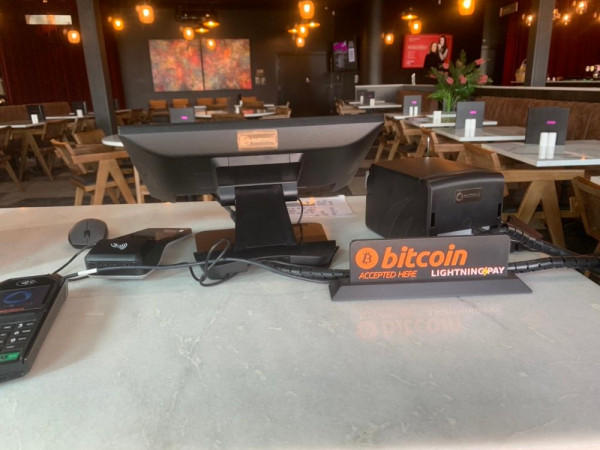
Pay with Bitcoin at Chouchou in Wellington
Why New Zealand Needs Bitcoin: The Fiat Failure Check
The case for Bitcoin in New Zealand is no longer theoretical. It is visible in every supermarket aisle and every real estate listing.
The Median House Price Table: 2014–2025
The "Great Kiwi Dream" of home ownership remains an elusive target for those saving in NZD. However, when we strip away the noise of the fiat currency and view the market through the lens of Bitcoin, the trend is clear: housing is becoming exponentially easier to acquire for those who hold the hardest asset.
| Year | NZD Median House Price | Median House Price in BTC | YE NZD BTC Price |
|---|---|---|---|
| 2014 | $440,000 | 664.63 | $662 |
| 2021 | $820,000 | 10.80 | $75,921 |
| 2024 | $795,500 | 4.84 | $164,293 |
| 2025 | $808,000* | 5.45** | $151,371*** |
*Median Price per REINZ data.
**Current spot price via CoinMarketCap.
***Spot price as of late December 2025.
The trend is undeniable. In 2014, a house required a small mountain of Bitcoin (664 BTC). By the end of 2025, that same house—despite its dollar price increasing nearly $370,000 over that decade—costs just under 5.5 Bitcoin. Even if you strip away the high growth years of 2014-2020 and look at the last five years, the median house price in New Zealand fell from over 10 BTC to 5.45 BTC now. Understand why this is happening and consider which currency will serve you better in the future.
Consumer Price Index (CPI) vs. Reality
The Reserve Bank of New Zealand (RBNZ) official annual inflation rate sits at 3.0% at the close of 2025. While the government touts this as returning to the top of the 1–3% target range, it bears little resemblance to the actual cost of living for many Kiwis.
Official CPI often underweights the "Non-Discretionary" essentials that are currently crushing household budgets:
- Council Rates: Major infrastructure repairs and insurance costs for councils have pushed annual rates increases well above 10% in many regions.
- Insurance: Premiums for home, medical, contents, and vehicle insurance continue to see significant double-digit jumps as providers reprice risk.
- Energy: Retail electricity and fuel costs remain high, further eating into the disposable income of New Zealand families.
If the RBNZ successfully maintains even a "low" 3% inflation rate, you lose half of your wealth's purchasing power in just 24 years. Inflation is not an accident; it is a design feature of the current system.
Key Data Points: The 2025 Continuity Table
| Metric | Oct 2023 | Dec 2024 | Dec 2025 |
|---|---|---|---|
| NZ Bitcoin Merchants* | 30 | 47 | 85 |
| Median House Price (BTC)** | 11.7 BTC | 4.84 BTC | 5.34 BTC |
| National Debt (Gross)*** | $155B | $175B | $182.5B |
| BTC/NZD Price**** | $66,654 | $164,293 | $151,371 |
*Merchant figures based on BTCmap.org and Bitcoin Basin data as of late 2025.
**Based on the national median house price vs. the current BTC spot price.
***New Zealand Treasury Half Year Economic and Fiscal Update Dec 2025.
****Spot price as of December 27, 2025, via CoinMarketCap.
Bitcoin Media in New Zealand
Independent outlets continue to lead the way with real Bitcoin analysis and opinion, while mainstream financial journalists also start to cover Bitcoin professionally.
The Transformation of Value Podcast
Hosted by Cody Ellingham, this podcast still sets the standard as the primary archive for the Kiwi Bitcoin scene. Cody’s show provided a critical platform for Bitcoin voices from all around the globe, with a local flavour built in - including our own Lightning Pay and Bitkiwi, as well as interviews with global thought leaders in the Bitcoin space such as Parker Lewis, Anita Posch, Allen Farrington and Joe Bryan.
Learn more about Cody and follow TTOV here.
NZ Everyday Investor Podcast
Darcy Ungaro's NZ Everyday Investor Podcast remains an important bridge between traditional finance and the Bitcoin world. In 2025, Darcy continued to push the boundaries of conventional investment advice, introducing listeners to new concepts of macro economics and wealth management in a style which is definitely different than the advice listeners to trad-fi voices would hear. Guests included high-profile Bitcoin advocates like Larry Lepard, Peter Dunworth and Daniel Batten.
In 2025, Darcy joined the team at Radical Investments but still plans to continue producing the NZ Everyday Investor.
Bitcoin in the Mainstream Media
It's a sign of maturity that Bitcoin news and updates are now featured in many mainstream media outlets in New Zealand. Sometimes they get the basics wrong, sometimes they bring on uninformed guests, but it does feel like the mood has changed and they are making a decent attempt to report what's happening.
Like many of us, they're still learning what Bitcoin is and what it means, but the fact that legacy media outlets like RNZ, Newstalk ZB, One News, Stuff and NZ Herald cover Bitcoin as "just another thing in the news" is progress.
Bitcoin goes to the Polls in 2026
As we close out 2025, the attention of New Zealand's Bitcoiners shifts toward the 2026 general election. While Bitcoin has historically been an apolitical issue in New Zealand, the developments in 2025—particularly the launch of the Bitcoin Policy Institute—have ensured that it will be on the radar of lawmakers as they prepare their campaign platforms.
Will we see a "Bitcoin-friendly" party emerge? Will one of the major parties adopt a formal stance on Bitcoin treasury holdings or mining infrastructure? Only time will tell, but one thing is certain: the conversation has only just begun. It has been a massive year for Bitcoin in New Zealand in 2025. Here's to more building and adoption in 2026!
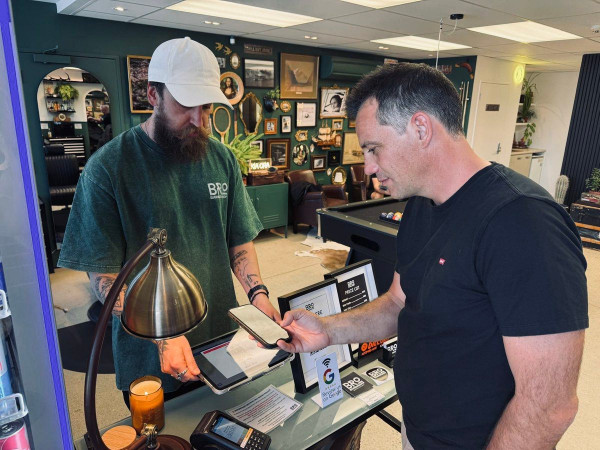
MP Joe Mooney paying for a haircut in Queenstown with Bitcoin